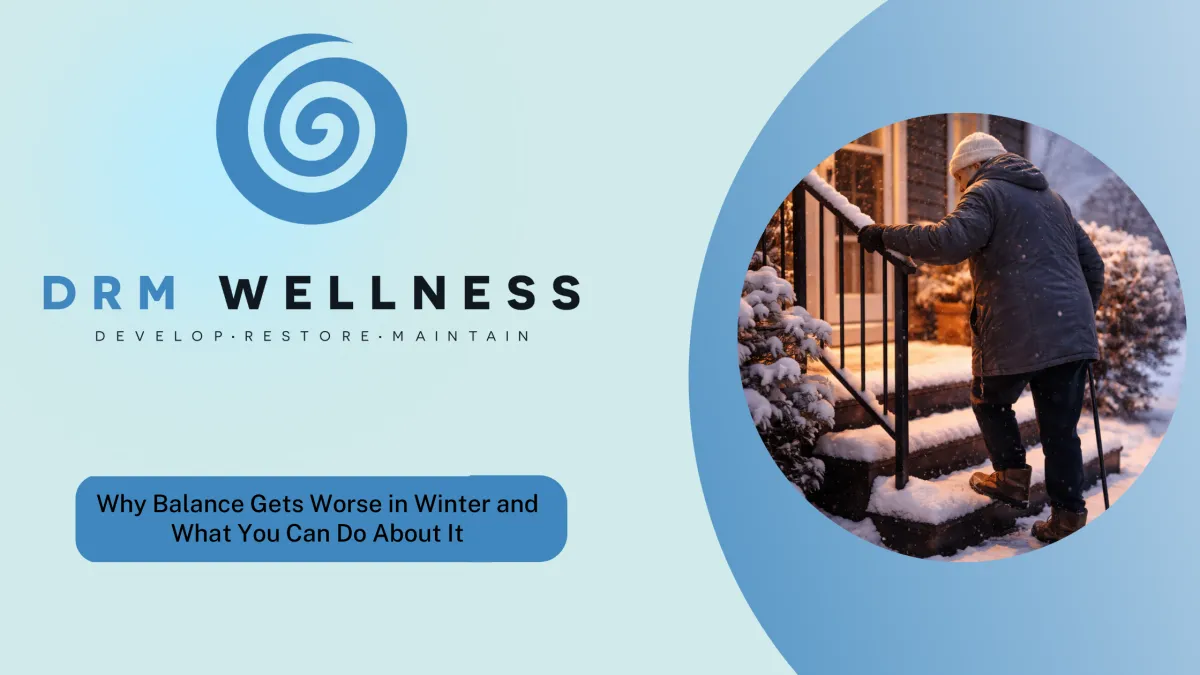
Why Balance Gets Worse in Winter and What You Can Do About It
March in the Midwest often brings lingering winter conditions mixed with sudden warm-ups. Ice, slush, uneven sidewalks, and fluctuating temperatures make this one of the most challenging months for balance and fall risk.
Winter is not just harder on your mood.
It is harder on your balance.
Many people notice feeling more unsteady during the winter months. Maybe you catch yourself grabbing furniture more often, walking more cautiously, or avoiding certain activities altogether. That change is not your imagination. Winter creates real physical and environmental challenges that make balance more difficult, especially for older adults and anyone already managing mobility concerns.
Understanding why this happens is the first step toward preventing falls and protecting independence.
Why Balance Gets Worse in Winter
Less Movement
Cold weather naturally keeps people indoors. Fewer walks, fewer errands, and fewer reasons to move mean the muscles that support balance are not being challenged as often. When daily movement drops, especially activities like walking on uneven surfaces, turning, reaching, and stepping outside your normal base of support, balance systems start to decondition. Strength in the hips, core, and ankles can decline faster than most people expect. Even a few weeks of reduced activity can lead to noticeable changes in stability, endurance, and confidence with movement.
Bulky Shoes and Boots
Winter footwear changes how your feet connect with the ground. Thick soles, stiff materials, and reduced ankle motion limit sensory feedback from the feet. That feedback is critical for balance because your body relies on tiny signals from the soles of your feet to make quick corrections. When those signals are muted, your balance reactions become slower and less precise. Boots that feel warm and supportive can still interfere with balance if they restrict natural foot and ankle movement or reduce traction awareness.
Cold Muscles and Joints
Cold temperatures increase stiffness in muscles and joints, especially in the hips, knees, ankles, and spine. Stiffer joints do not respond as quickly when you need to adjust your position. Reaction time decreases, flexibility is reduced, and movements often become smaller and more cautious. That split second matters when you need to recover from a slip, step over a threshold, or navigate an uneven surface. Cold muscles also fatigue faster, which further increases fall risk as the day goes on.
Reduced Vision and Lighting
Shorter days, glare from snow, and dim indoor lighting all affect visual input. Vision plays a major role in balance, helping your brain judge distance, surface changes, and movement speed. In winter, shadows are deeper, contrast is reduced, and glare can distort depth perception. Indoors, people often rely on lamps instead of overhead lighting, which can leave walkways poorly lit. When visual information is limited or inconsistent, the body struggles to maintain stability.
Fear of Falling
A single slip or near fall can change how someone moves. Many people begin to take shorter steps, move more slowly, or hold their body stiffly in an attempt to feel safer. While this response is understandable, it often increases fall risk. Stiff movement limits natural weight shifting and reduces the body’s ability to make quick balance corrections. Over time, fear leads to less movement, less confidence, and further decline in balance ability, creating a cycle that can be hard to break without support.
Why This Matters More Than You Think
Balance issues do not just increase fall risk. They change behavior.
When people feel unsteady, they begin to move differently and make quiet adjustments to their daily routines. They may stop taking walks, avoid uneven surfaces, or skip activities they once enjoyed. Outings feel harder. Exercise feels risky. Independence starts to feel conditional instead of natural.
Over time, this loss of confidence can lead to real consequences. Less movement means more weakness. More reliance on others means fewer opportunities to problem-solve and adapt. What starts as caution can slowly turn into isolation, reduced endurance, and a shrinking comfort zone. Quality of life is often affected long before an actual fall ever happens.
For many families, these changes first become noticeable during the winter months. A parent who no longer wants to go out after dark. A spouse who holds onto furniture more often. A loved one who seems more hesitant, slower, or less sure of themselves. These small signs are easy to dismiss as seasonal or temporary, but they often signal deeper changes in balance, confidence, and function.
This is why winter is such an important time to pay attention. Addressing balance early helps people stay active, engaged, and independent, not just through the cold months, but year-round.
What You Can Do Right Now
The good news is that many winter-related balance issues are modifiable. Small, consistent actions can make a meaningful difference.
Keep Moving, Even Indoors
You do not need a gym membership or perfect weather to maintain balance. Short, frequent movement sessions throughout the day are often more effective than long workouts. Simple activities like sit-to-stands from a chair, gentle standing balance work at the counter, and light strengthening for the legs and hips help keep the muscles that support balance active and responsive.
Indoor walking is also an excellent option during winter. Many malls open early specifically for walking, even when the stores are closed. These spaces offer flat, well-lit, climate-controlled environments that are ideal for maintaining walking endurance and balance. They also provide something most neighborhoods do not in winter: multiple places to sit and rest when you need a break. Being able to pause, catch your breath, and then continue moving supports confidence and reduces fear.
If malls are not accessible, other indoor options include large community centers, indoor tracks, or even structured walking loops inside your home. The goal is not intensity. The goal is consistency. Regular movement keeps balance systems engaged, muscles warm, and confidence intact, even when winter limits outdoor activity.
Warm Up Before You Move
Before standing up from a chair or heading out the door, take a few minutes to gently warm up your body. Simple movements at the ankles, hips, and trunk help increase circulation and reduce stiffness, especially in colder temperatures. Ankle pumps, gentle hip shifts, and slow trunk rotations prepare your body to respond more quickly to balance challenges. Warm joints move more freely, and muscles that are awake and engaged are better able to react if you slip, trip, or need to change direction suddenly.
Check Your Footwear
Footwear plays a bigger role in balance than many people realize. Shoes should have good traction, a firm heel, and minimal sole compression to provide stable contact with the ground. Very soft or worn-down soles reduce feedback from your feet and slow balance reactions. Inside the home, avoid slick socks, backless slippers, or footwear with smooth bottoms. These are common contributors to indoor falls, especially on hard flooring or stairs. Supportive shoes or well-fitted slippers with traction can significantly reduce slipping risk.
Improve Lighting and Clear Pathways
Winter often brings extra clutter into the home, including boots, coats, umbrellas, bags, and packages. These items tend to collect near entryways, hallways, and stairs, exactly where clear footing matters most. Take time to keep walkways open and predictable. Improve lighting in high-traffic areas, especially near stairs, bathrooms, and entrances. Good lighting helps your brain process surface changes and obstacles more accurately, which directly supports balance and stability.
Address Balance Changes Early
Waiting for a fall is not the answer. Subtle balance changes often appear long before a major incident occurs, such as increased hesitation, furniture walking, or avoiding certain activities. These early signs are important. Balance issues are much easier to improve when addressed early, before fear, compensation, and avoidance set in. Early support helps people stay active, confident, and independent, rather than reacting after an injury has already occurred.
How Occupational Therapy Can Help
Occupational therapy focuses on balance as it shows up in real life, not just in isolated exercises.
Rather than only looking at strength or single movements, occupational therapy examines how balance affects daily tasks such as getting out of a chair, navigating the home, managing stairs, carrying items, and moving safely in the community. Balance is closely tied to confidence, routines, and independence, so addressing it requires more than one-size-fits-all exercises.
Support may include functional balance and mobility training that mirrors everyday activities, strength and endurance work that fits naturally into daily routines, and practical strategies to improve safety at home and in frequently used environments. The goal is to help people move more efficiently, react more confidently, and feel steadier during the activities that matter most to them.
Occupational therapy also considers how fear, habits, and environmental factors influence balance. Small adjustments in movement patterns, home setup, or daily routines can often reduce fall risk and improve confidence without requiring major lifestyle changes.
A Final Thought
If winter has made you or someone you love feel more unsteady, it is worth paying attention. Balance changes are common, especially during colder months, but they do not have to be ignored or accepted as inevitable.
Addressing concerns early, even through a simple conversation or assessment, can help prevent bigger problems later and support continued independence through every season.
Call us for a consultation about how we can help you Develop Skills, Restore Function, and Maintain Health and Independence.
