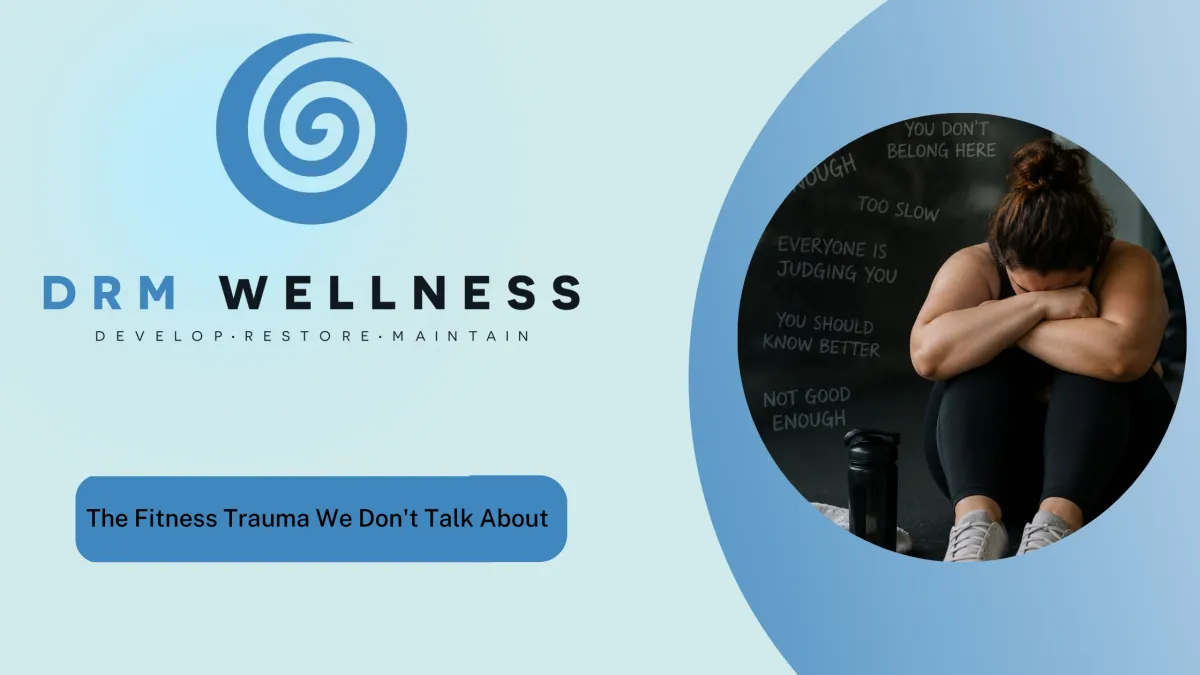
The Fitness Trauma We Don't Talk About
Let's start with a question.
Have you ever driven past a gym and immediately thought:
"Nope."
Not because you don't want to be healthier.
Not because you don't care about your body.
Not because you're lazy.
Just... nope.
If that sounds familiar, you're not alone.
For many people, especially those in larger bodies, exercise isn't just about fitness. It's about memories, and some of those memories aren't exactly pleasant.
When people talk about why they don't exercise, the conversation usually focuses on motivation, discipline, or willpower.
What if the real issue isn't motivation? What if it's baggage?
Not the kind you take on vacation. The emotional kind.
Remember Gym Class?
For some people, gym class was fun.
For others, gym class felt like a weekly public humiliation event disguised as education.
Maybe you were the last person picked for teams.
Maybe you struggled with running the mile or the dreaded Turkey Trot in November.
Maybe you were embarrassed to change clothes in the locker room.
Maybe you got laughed at when you couldn't do a pull-up.
Maybe you remember standing in line, praying nobody noticed you were out of breath.
Maybe you remember the dreaded fitness tests.
You know the ones. The tests that somehow managed to make children feel like they were being evaluated for the Olympics.
Looking back, it's amazing any of us survived the Presidential Fitness Test without requiring therapy…and don’t get me started on the “pinch an inch” skinfold calipers.
For many people, those experiences left a mark, and those feelings don't magically disappear when we become adults.
The Doctor's Office Isn't Always Better
Now, let's be clear. Weight can absolutely impact health. No one is arguing otherwise.
But for many people in larger bodies, it can feel like every symptom, every concern, and every question gets filtered through the same lens before the conversation even begins.
Sometimes that experience is subtle. Sometimes it's not.
Maybe you've had a provider assume you don't exercise before asking.
Maybe you've been told to lose weight before anyone investigated what was actually causing your symptoms.
Maybe you've put off appointments because you were dreading the lecture you expected to receive.
Maybe you've sat on an exam table wearing a paper gown, already feeling vulnerable, only to leave feeling worse than when you arrived.
After enough experiences like that, many people begin to expect judgment before they even walk through the door.
You wear the lightest outfit you own, don’t wear jewelry and plan to take off your shoes and everything out of your pockets before they weigh you.
The anxiety starts in the parking lot.
You rehearse what you're going to say.
You promise yourself you'll speak up.
Then the appointment happens, and suddenly you're feeling embarrassed, frustrated, or defeated all over again.
Over time, some people start to associate healthcare and fitness environments with shame instead of support.
And that's a problem.
Because when people feel judged, they don't become more likely to seek help.
They become more likely to avoid it.
They postpone appointments. They ignore symptoms. They stop asking questions. They stop believing anyone can help.
Ironically, the very people who may benefit most from healthcare support are sometimes the ones who feel least welcome accessing it.
The same thing can happen in fitness spaces.
If you've spent years feeling criticized, stared at, or blamed for every health concern, walking into a gym can feel less like self-care and more like volunteering for another uncomfortable experience.
That doesn't mean you're unmotivated.
It doesn't mean you don't care about your health.
It means you're human.
Nobody eagerly returns to places where they've repeatedly felt embarrassed. The good news is that healthcare and fitness don't have to look like that.
There are providers, trainers, therapists, and coaches who understand that people deserve dignity, respect, and individualized care regardless of their size.
You deserve conversations that focus on your goals, your function, your health, and your quality of life.
Not just a number on a scale.
Health care works best when people feel safe enough to participate in it.
And everyone deserves that experience.
The Gym Can Feel Like Another Planet
Walk into many fitness facilities and you'll see giant mirrors, tiny workout clothes, and people who look like they were born knowing how to use every machine.
Meanwhile, you're standing there trying to figure out whether the machine is for your legs, your arms, or launching a satellite.
It's intimidating.
Especially if you've ever worried about:
• Being stared at
• Not knowing what you're doing
• Equipment fitting properly
• Getting out of breath
• Looking foolish
For some people, walking into a gym feels exciting.
For others, it feels like the first day of high school all over again.
Everyone seems to know where they're going. Everyone seems to know what they're doing. Everyone seems to have a plan.
Meanwhile you're just trying to find the water fountain without looking lost.
The fitness industry often does a fantastic job of making exercise look effortless. Commercials show people smiling while running up mountains. Fitness influencers somehow wake up at 4:30 a.m., drink green smoothies, and appear thrilled to do burpees while the rest of us are just trying to convince ourselves to put on pants with a waistband.
The truth is that many gyms can feel overwhelming, especially for people in larger bodies.
You may wonder if the equipment will fit comfortably.
You may worry that people are judging you.
You may feel self-conscious when you're breathing hard after five minutes on the treadmill.
You may even feel like you don't belong there at all.
If you've ever had those thoughts, you're far from alone.
One of the biggest misconceptions about exercise is that confidence comes before you start.
In reality, confidence often comes after you've started.
Nobody walks into a new environment knowing everything.
The people confidently using those machines today were once the people reading the instructions upside down and pretending they knew what they were doing.
Every experienced gym-goer was once a beginner.
Every runner started with a first walk.
Every strong person started out weaker than they are today.
Unfortunately, when you've had negative experiences related to your body, exercise, or weight, your brain remembers.
It remembers the comments.
It remembers the embarrassment.
It remembers the times you felt out of place.
So when you step into a fitness environment, your brain isn't necessarily evaluating the current situation. It's pulling out old files from years ago and saying, "Remember how this went last time? Let's avoid that."
That's not weakness.
That's your brain doing exactly what it was designed to do: protect you from perceived threats. The problem is that your brain doesn't always distinguish between actual danger and emotional discomfort.
A treadmill isn't dangerous.
Trying a new exercise class isn't dangerous.
Walking into a gym isn't dangerous.
But if those situations are connected to years of negative memories, they can feel dangerous.
The good news is that those feelings don't have to control your future. You don't have to become a fitness fanatic overnight. You don't have to love every workout. You don't have to wear matching workout clothes. You don't have to know the difference between every machine in the building.
You simply have to give yourself permission to be a beginner.
Everyone starts somewhere, and despite what social media may suggest, nobody was born knowing how to adjust the seat on the leg press machine.
Not even the gym bro in the tank top.
Here's the Part Nobody Talks About
When you've been embarrassed enough times, avoiding exercise can start to feel safer than trying.
Not because you don't want change.
Not because you don't care.
Because humans naturally avoid situations that have hurt them in the past.
That's not weakness.
That's psychology.
Imagine touching a hot stove. You learn very quickly not to do it again. For some people, movement became the hot stove. Every attempt came with criticism, shame, discomfort, or failure. Eventually, avoidance becomes self-protection.
The Good News
Past experiences do not get to decide your future.
Movement doesn't belong to gym bros.
It doesn't belong to fitness influencers.
It doesn't belong to people who wear matching workout sets and somehow enjoy burpees.
Movement belongs to everyone.
Every body.
Every age.
Every size.
Every fitness level.
You don't have to earn the right to move.
You already have it.
Let's Redefine Exercise
What if exercise wasn't punishment?
What if it wasn't about shrinking yourself?
What if it wasn't about earning food or fixing flaws?
What if movement was simply a way to feel better?
To have more energy. To play with your kids. To keep up with your grandkids. To travel. To garden. To get off the floor without popping like a glow stick.
Those goals matter and they're often far more meaningful than a number on the scale.
Start Small. Ridiculously Small.
You do not need a gym membership tomorrow. You do not need a perfect meal plan. You do not need to become a fitness influencer. You simply need one positive experience with movement.
Take a walk around the block.
Dance in your kitchen.
Stretch during commercial breaks.
March in place while your coffee brews.
Success builds confidence. Confidence builds consistency. Consistency creates change.
Final Thoughts
If exercise feels complicated, emotional, frustrating, or even scary, there may be a reason.
Sometimes the biggest barrier isn't your body.
It's the collection of experiences you've carried for years.
The good news is that those experiences don't have to write the rest of your story.
You deserve a relationship with movement that feels supportive, empowering, and maybe even fun.
No shame.
No judgment.
No fitness trauma required.
Just one small step forward.
