Blogs
“When health meets heart, the conversation begins, and it starts here.
Knowledge that empowers. Stories that connect. Support that matters.”
~ DRM Wellness
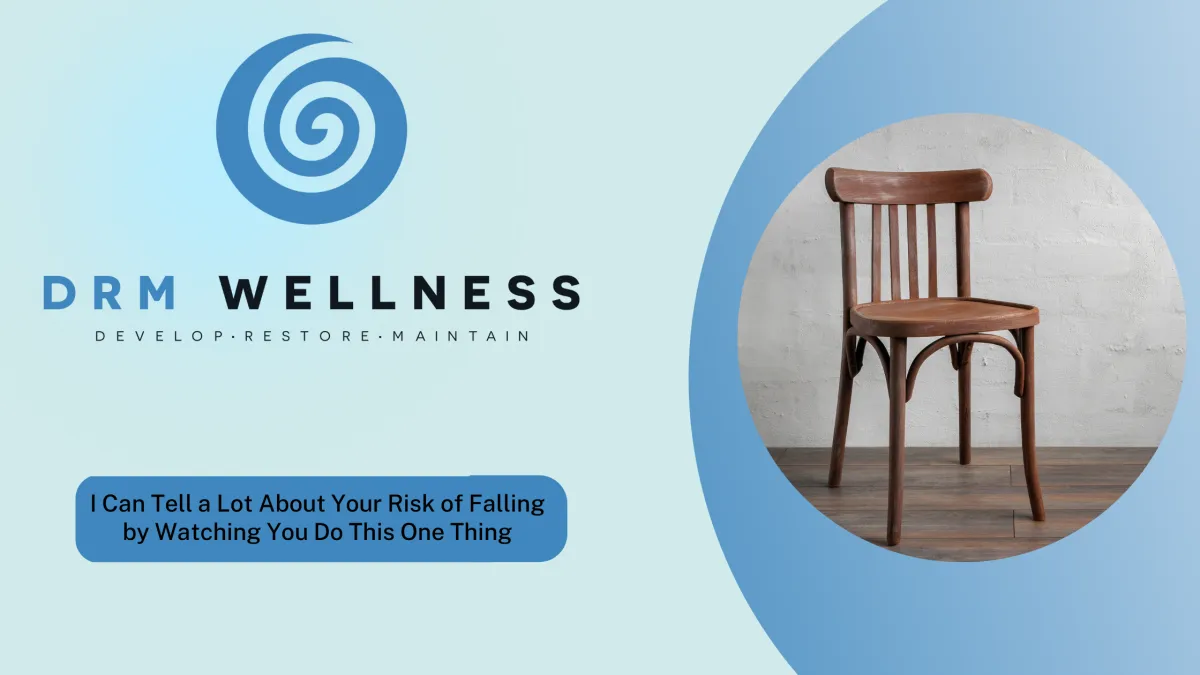
I Can Tell a Lot About Your Risk of Falling by Watching You Do This One Thing
If I had just one movement to assess someone’s fall risk, it would not be walking.
It would not be standing on one foot.
It would not even be climbing stairs.
It would be watching how you stand up from a chair.
This single, everyday movement tells me more about strength, balance, coordination, and confidence than most people realize, and most people do it dozens of times a day without ever thinking about it.
Why Standing Up Matters More Than You Think
Standing up from a chair requires:
Leg strength
Core stability
Balance
Coordination
Confidence in movement
If any one of those is off, your body will find a workaround.
Those workarounds are often the earliest signs of increased fall risk.
What I Notice Right Away
When someone stands up, I am watching for a few key things.
Do You Need Your Hands?
Using armrests, pushing off your thighs, or grabbing nearby furniture can signal reduced leg strength or balance confidence.
Occasional use is normal. Needing your hands every single time is worth paying attention to.
Do You Rock or Build Momentum?
Rocking forward one or more times before standing often means your body is compensating for reduced strength or stability.
It is subtle, but very telling.
Does It Take Multiple Attempts?
If you have to sit back down and try again, your risk of losing balance increases significantly.
This is especially important in bathrooms, low chairs, or unfamiliar environments.
Do You Feel Unsteady Once You Are Up?
Standing is only half the movement. Regaining balance once upright is just as important.
Falls often happen in the seconds after standing, not during walking.
Why This One Movement Predicts Falls
Most falls do not happen during dramatic moments.
They happen:
When getting up quickly
When standing after sitting too long
When distracted
When tired
When rushing to the bathroom
Standing up is a transition movement. Transitions are where balance systems are most challenged.
If this movement is hard, your fall risk is already higher, even if you have never fallen before.
Why People Blame Age Instead
Many people say:
“Low chairs are just harder now.”
“I’m stiff when I first stand.”
“I just take a second to get my balance.”
These statements are incredibly common, and they are often dismissed as normal aging.
But in reality, they are signals that your body is asking for support.
The Good News
Difficulty standing up is one of the most modifiable risk factors for falls.
With the right approach, many people can:
Improve leg strength
Improve balance and stability
Feel more confident standing and moving
Reduce fall risk at home and in the community
This does not require gym workouts or extreme exercise.
It requires targeted, functional movement training and sometimes small environmental changes.
What This Means for Aging in Place
If your goal is to stay independent and safe in your home, this movement matters.
Standing up affects:
Toileting safety
Getting out of bed
Rising from couches and dining chairs
Getting out of a car
Managing fatigue throughout the day
Ignoring difficulty with this task often leads to doing less, sitting more, and relying more on others.
If standing up has become harder, slower, or less steady, that is not something to ignore.
It is not about age.
It is about function.
Call us for a consultation about how we can help you Develop Skills, Restore Function, and Maintain Health & Independence.
Take The Next Step with DRM Wellness
Testimonials
Get In Touch

Proudly Serving Omaha and the surrounding areas
MEDICAL DISCLAIMER:
All information on this website is intended for instruction and informational purposes only. The authors are not responsible for any harm or injury that may result. Significant injury risk is possible if you do not follow due diligence and seek suitable professional advice about your injury.
No guarantees of specific results are expressly made or implied on this website.
Copyright © 2025 All Rights Reserved by DRM Wellness.
Facebook
Instagram
LinkedIn
Youtube
TikTok