Blogs
“When health meets heart, the conversation begins, and it starts here.
Knowledge that empowers. Stories that connect. Support that matters.”
~ DRM Wellness
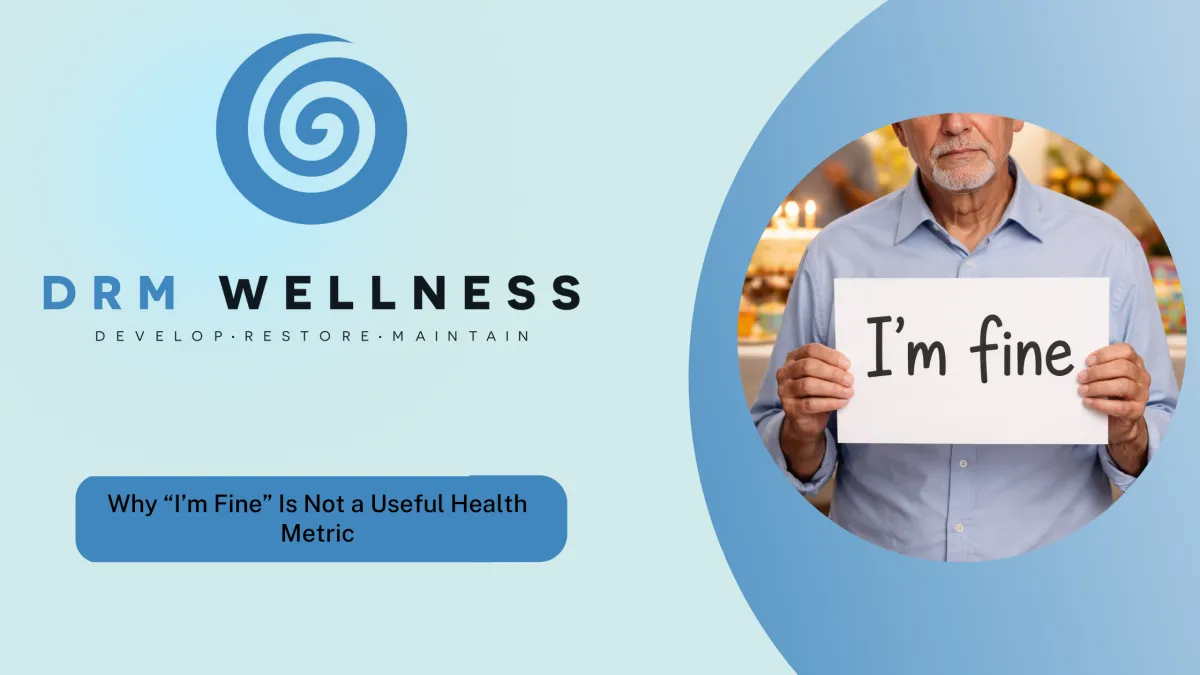
Why “I’m Fine” Is Not a Useful Health Metric
“I’m fine.”
It is one of the most commonly used phrases in health conversations. It is also one of the least informative.
People say it when standing up hurts but eventually works.
People say it when stairs feel harder but are still doable.
People say it when they have reorganized their entire routine to avoid discomfort, fatigue, or fear.
“I’m fine” usually does not mean nothing is wrong.
It means nothing has stopped you completely yet.
What “I’m Fine” Usually Means in Real Life
In practice, “I’m fine” often translates to one of the following:
Standing up takes a minute, but it gets done.
Shoes are slipped on instead of tied.
Laundry gets carried in smaller loads.
Groceries are brought in over three trips instead of one.
Certain cabinets just do not get used anymore.
None of these sound alarming. That is exactly why they are so easy to ignore.
Compensation Is the Body’s Favorite Survival Skill
The human body is incredibly clever. When something becomes difficult, it finds another way.
One knee hurts, so weight shifts to the other side.
Balance feels shaky, so furniture becomes a support system.
Reaching feels risky, so everything slowly migrates to counter height.
Compensation works beautifully in the short term. It keeps life moving. It avoids embarrassment. It prevents discomfort.
Compensation is also very convincing. It creates the illusion that everything is fine.
The Chair That Tells on You
One of the most honest pieces of furniture in any home is the chair.
People often say they have no trouble standing up. Then they sit. Then they rock forward twice. Then they push off their thighs. Then they pause once standing to regain balance.
When asked about it, the response is usually casual.
“Oh, I’ve always done that.”
“These chairs are just low.”
“I just take a second.”
Those seconds add up. Those movements reveal strength, balance, and confidence issues long before anyone labels them a problem.
The Furniture That Has Quietly Been Promoted
Many homes contain unofficial safety equipment.
The back of the couch.
The kitchen counter edge.
The door frame.
The bedpost.
These items were not designed for stability, but they get promoted anyway.
People do not think of this as a change. It just feels practical. It feels smart.
Over time, walking without touching something starts to feel optional instead of normal.
Silent Decline Does Not Announce Itself
Loss of function rarely shows up with drama. It does not knock. It does not demand attention.
It whispers.
It whispers when tasks feel more tiring than they used to.
It whispers when the fastest route is avoided.
It whispers when sitting sounds better than standing for one more thing.
Most people do not wake up one day unable to do something. They slowly stop choosing to do it.
Why “I’m Fine” Sticks Around So Long
“I’m fine” is socially convenient. It keeps conversations short. It avoids worry. It avoids change.
It also feels responsible. Admitting struggle can feel like admitting weakness, even when it is not.
Many people believe acknowledging difficulty means something bad is coming next. Loss of independence. Big changes. Drastic decisions.
So “I’m fine” becomes a shield.
What a More Useful Metric Sounds Like
A better question than “Am I fine?” sounds more like:
Does this take more effort than it used to?
Do I avoid this when I am tired?
Have I changed how I do this to make it easier?
Would I notice if someone else moved the way I do?
These questions reveal patterns instead of forcing a yes or no answer.
The Problem With Waiting for Obvious Trouble
Many people wait for a fall, a near miss, or a moment of real fear before taking changes seriously.
By that point, compensation has been in charge for a long time.
The earlier patterns are quieter but far more useful. They show where strength can be built, where balance can improve, and where the environment can offer better support.
The Relief Most People Feel When This Clicks
One of the most common reactions when people realize they have been compensating is relief.
Relief that they are not lazy.
Relief that they are not broken.
Relief that there is an explanation.
“I’m fine” kept them functioning. Understanding keeps them improving.
The Real Takeaway
“I’m fine” is not a diagnosis. It is a placeholder.
It means life is still working, but not always working well.
Paying attention to how tasks get done matters more than whether they get done at all. The way the body adapts tells a much more honest story than the words people use to describe it.
Once that story becomes visible, people gain something better than reassurance.
They gain options.

Take The Next Step with DRM Wellness
Testimonials
Get In Touch

Proudly Serving Omaha and the surrounding areas
MEDICAL DISCLAIMER:
All information on this website is intended for instruction and informational purposes only. The authors are not responsible for any harm or injury that may result. Significant injury risk is possible if you do not follow due diligence and seek suitable professional advice about your injury.
No guarantees of specific results are expressly made or implied on this website.
Copyright © 2025 All Rights Reserved by DRM Wellness.
Facebook
Instagram
LinkedIn
Youtube
TikTok