Blogs
“When health meets heart, the conversation begins, and it starts here.
Knowledge that empowers. Stories that connect. Support that matters.”
~ DRM Wellness
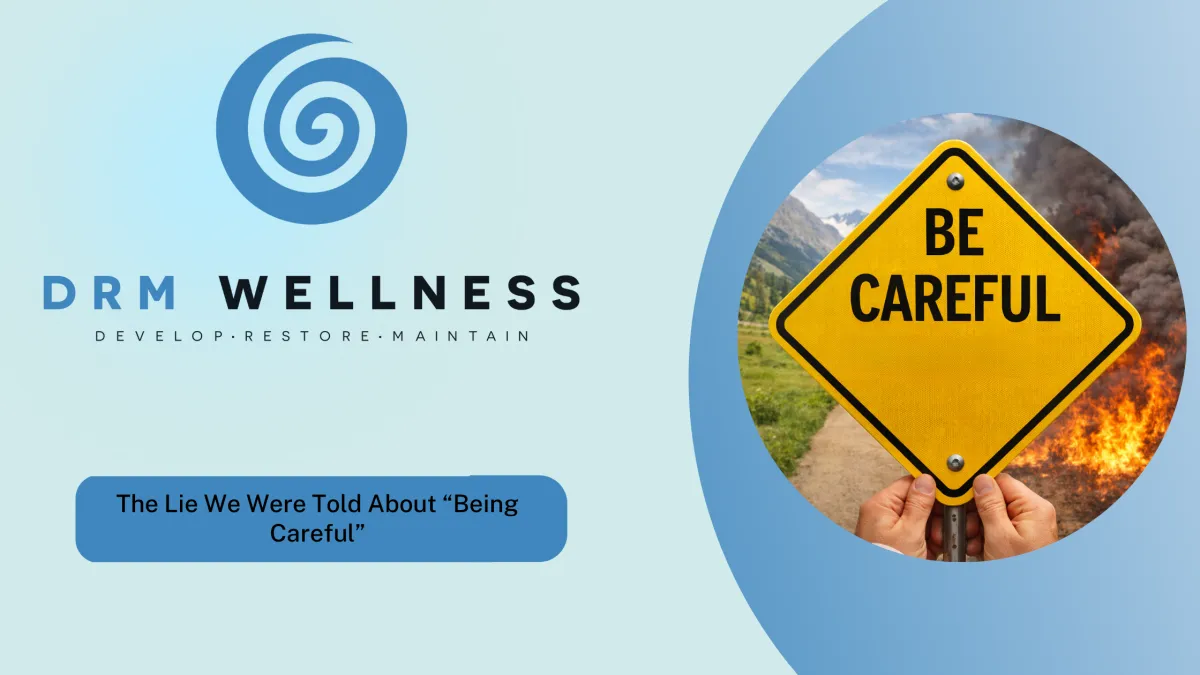
The Lie We Were Told About “Being Careful”
Somewhere along the way, many of us were taught that safety comes from caution.
Move slower.
Pay attention.
Don’t rush.
Be careful.
It sounds reasonable. Responsible, even.
Yet, most people who fall were being careful when it happened.
They were not running.
They were not reckless.
They were not ignoring obvious danger.
They were walking to the bathroom.
Standing up from a chair.
Reaching for something familiar.
So where did we go wrong?
How “Being Careful” Became the Default Advice
“Be careful” is easy advice. It requires no explanation, no assessment, and no follow-up.
It shifts responsibility entirely onto the person and quietly assumes the environment and the task are already safe.
If something goes wrong, the conclusion is simple. You just were not careful enough.
But that logic falls apart quickly when you look at how the body actually works.
Careful Does Not Equal Capable
Being careful usually means slowing down and limiting movement.
While slowing down can feel safer in the moment, it often reduces the very things that keep us upright.
Balance relies on quick reactions.
Strength relies on repeated use.
Confidence relies on successful movement.
When people focus on being careful, they often move stiffly. They hesitate. They take smaller steps. They avoid turning quickly or reaching fully.
Ironically, this makes them less stable, not more.
I once watched someone take several cautious, tiny steps across a room, gripping furniture the whole way. When asked why they moved like that, they said, “I’m being careful. I don’t want to fall.”
But every step they took increased their reliance on external support and reduced their ability to react naturally.
Careful had replaced capable.
The Problem With Caution as a Strategy
Caution is a short-term strategy. It can help in unfamiliar situations.
But when it becomes the main safety plan, it creates new problems.
People stop challenging their balance.
They stop building strength.
They stop trusting their bodies.
Over time, their world shrinks.
They sit more.
They reach less.
They choose the safest path instead of the most functional one.
This is not because they are weak. It is because they are adapting to fear, not function.
What Actually Keeps People Safe
Real safety comes from three things working together.
Skill.
Strength.
Environment.
Skill is your body’s ability to react. To step quickly. To turn without thinking. To recover when something unexpected happens.
Strength is what allows you to control your movement. Getting up from a chair. Catching yourself. Carrying something without throwing off your balance.
Environment is everything around you. Lighting. Layout. Surfaces. Support. The difference between a space that demands constant vigilance and one that quietly supports you.
None of these improve by being careful alone.
A Real-Life Example
Think about walking on ice.
The people who fall are often the ones moving cautiously, stiff and tense, barely lifting their feet.
The people who stay upright are usually the ones with better balance reactions, stronger legs, and footwear that supports them.
The environment matters. The skill matters. The strength matters.
Carefulness does not override physics.
Why This Lie Persists
We like simple explanations.
“Be careful” feels empowering because it sounds like control.
But it avoids harder conversations about:
Loss of strength
Changes in balance
Pain
Poor lighting
Unsafe layouts
Habits that no longer serve us
It is easier to tell someone to be careful than to admit something needs to change.
What to Say Instead
Instead of asking, “How do I be more careful?”
A better question is, “What would make this easier?”
Easier to stand.
Easier to see.
Easier to reach.
Easier to move without thinking.
Those questions lead to solutions that actually reduce risk.
The Shift That Matters
Safety is not about moving less.
It is about moving better.
It is not about tiptoeing through life.
It is about building the ability and environment to move with confidence.
Once people understand this, something interesting happens.
They stop blaming themselves.
They stop apologizing for their bodies.
They start noticing what supports them and what does not.
That awareness changes everything.
Not because they are suddenly reckless, but because they are no longer relying on a lie that was never meant to protect them in the first place.
Being careful was never meant to be the whole plan. Caution can help in the moment, but it cannot replace strength, skill, and a supportive environment. True safety comes from moving with confidence, not fear, and from spaces that work with your body instead of against it. When we stop treating carefulness as the goal and start treating capability as the priority, people move better, feel safer, and stay independent longer. That shift, more than any warning or reminder, is what actually changes outcomes.

Take The Next Step with DRM Wellness
Testimonials
Get In Touch

Proudly Serving Omaha and the surrounding areas
MEDICAL DISCLAIMER:
All information on this website is intended for instruction and informational purposes only. The authors are not responsible for any harm or injury that may result. Significant injury risk is possible if you do not follow due diligence and seek suitable professional advice about your injury.
No guarantees of specific results are expressly made or implied on this website.
Copyright © 2025 All Rights Reserved by DRM Wellness.
Facebook
Instagram
LinkedIn
Youtube
TikTok